Almost every yoga teacher training claims to go "deep." Very few say what that actually means, or how it's supposed to show up in the way you teach once the training is over. We wanted a real answer to that question for our own trainings — something more specific than a feeling. So we built one, and gave it a name: D.E.P.T.H.
D.E.P.T.H. stands for Design, Educate, Physiology, Truth, and Hold. It isn't a slogan we added after the fact — it's the same five-part structure behind the modules you'll go through with us, whether you're training in the dynamic styles, in Yin, or in hands-on adjustment.
The Five Pillars
Design
Intelligent sequencing. A class is built with real structure and purpose — never a random list of poses strung together because they're popular.
Educate
You leave able to actually teach — able to explain, demonstrate, and pass on what you know with confidence, not just perform it yourself.
Physiology
Real, science-based understanding of the body — anatomy, biomechanics, and how movement actually works, not just what a pose is supposed to look like.
Truth
Honesty over performance. We teach what's real about a posture and about your own practice — including its limits — not what looks impressive.
Hold
The hands-on skill to guide a student safely — through touch in dynamic classes, or through steady, quiet presence in Yin.
Why Hold Means Something Different in Yin
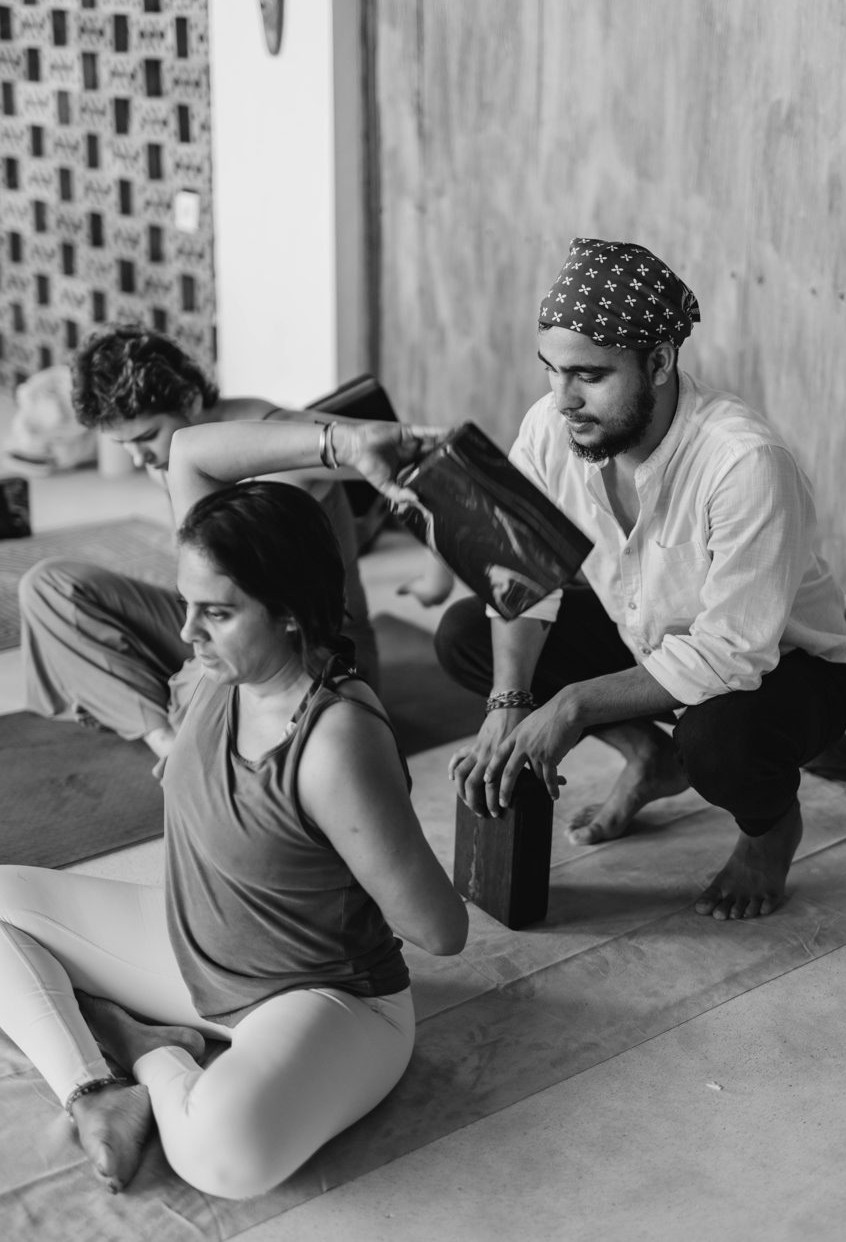
The letter that took us longest to land on was H. Our first instinct was "hands-on adjustment," because that's such a core skill for teaching Vinyasa, Hatha, and Ashtanga — but hands-on adjustment isn't really part of how Yin is taught. Yin asks for something quieter: the ability to hold space, to guide a student into stillness and stay grounded yourself while they sit with discomfort in a long hold.
Rather than force the same definition onto both, we kept the letter and let its meaning flex: in a dynamic class, Hold means hands-on adjustment, built with real technique and consent. In Yin, Hold means presence — the steady, quiet support that helps a student stay in a pose instead of coming out of it early. Same letter, same underlying skill of guiding someone safely through discomfort, taught two different ways.
The Same Structure, Two Very Different Practices
This same flexibility runs through all five letters. Design means building a Vinyasa class toward a peak posture, or moving with intention through Ashtanga's set sequence — but in Yin, it means building a class around the meridians and connective tissue you're targeting that day. Physiology means joint mechanics and muscle action in a dynamic flow, and fascia, connective tissue, and how the body responds to sustained holds in Yin. The letters don't change; how they show up depends entirely on which practice you're teaching.
That's the actual point of naming it. D.E.P.T.H. isn't there to sound impressive on a page — it's the checklist we hold every module of our curriculum against, for the dynamic modules and the dedicated Yin course alike. We want to give you a deep and true understanding of the postures, the mechanics of the body, and sequencing, and finally, the confidence and structure to guide a class in front of real students. So that you leave training with a real transformation, both in your own practice and in your teaching.
You can see D.E.P.T.H. mapped out module by module across all three of our trainings: the 300-Hour Multistyle Training in Rishikesh, the 300-Hour Hybrid Training running Oct 27–Nov 13, 2027, and Beyond the Asana at The Path in Bali.