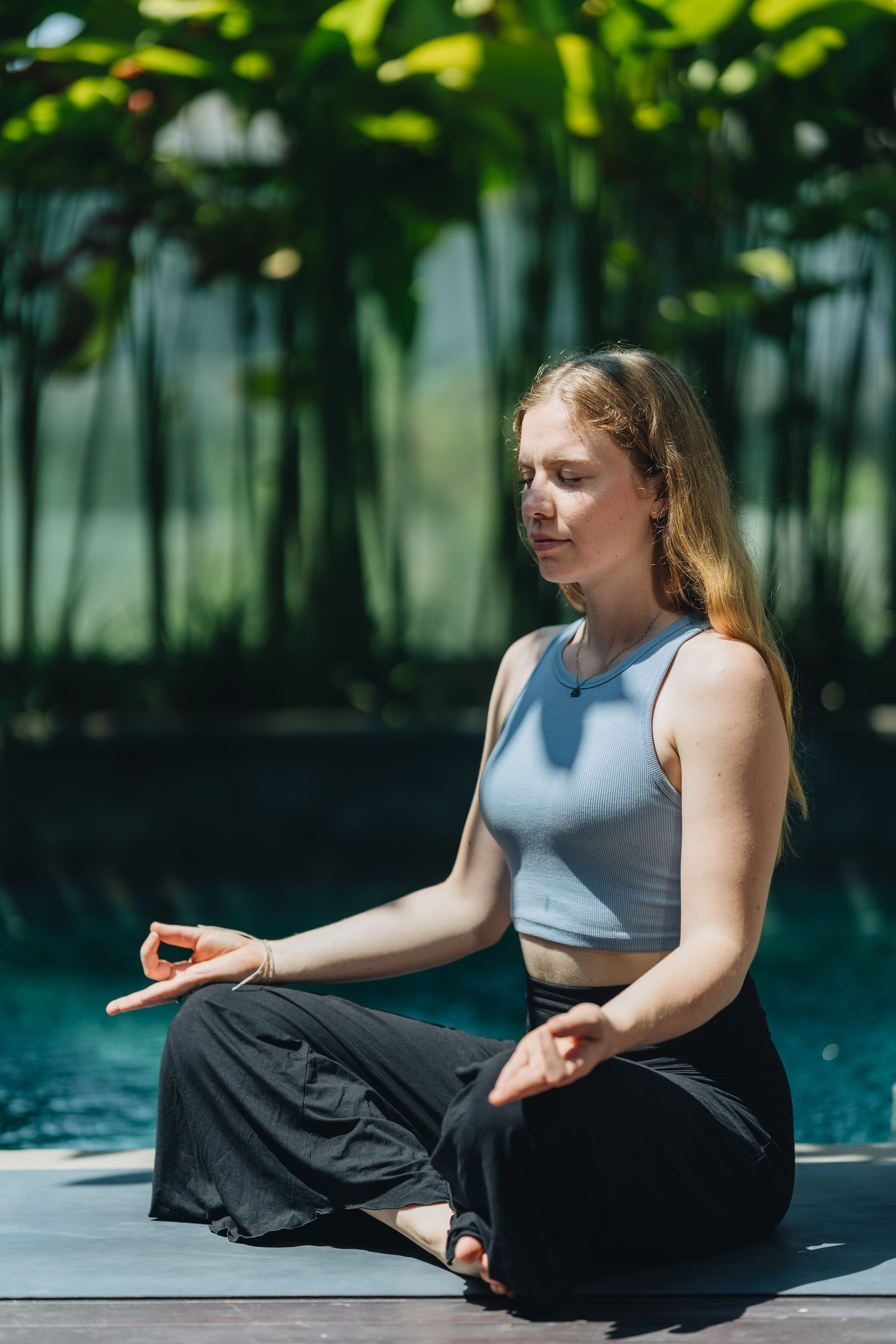
Yin gets underestimated a lot. To someone watching from the doorway, it looks like the easy class — a few shapes, long holds, not much movement. Ask anyone who's actually sat in Dragon Pose for four minutes whether it was easy. What's happening in a Yin practice is genuinely different from what happens in Vinyasa or Hatha, and understanding the difference changes how you approach it.
I come to this from two directions — as a Yin teacher, and as a Holistic Health Coach and Stress Management Trainer. Those two things turned out to be much more connected than I expected when I started.
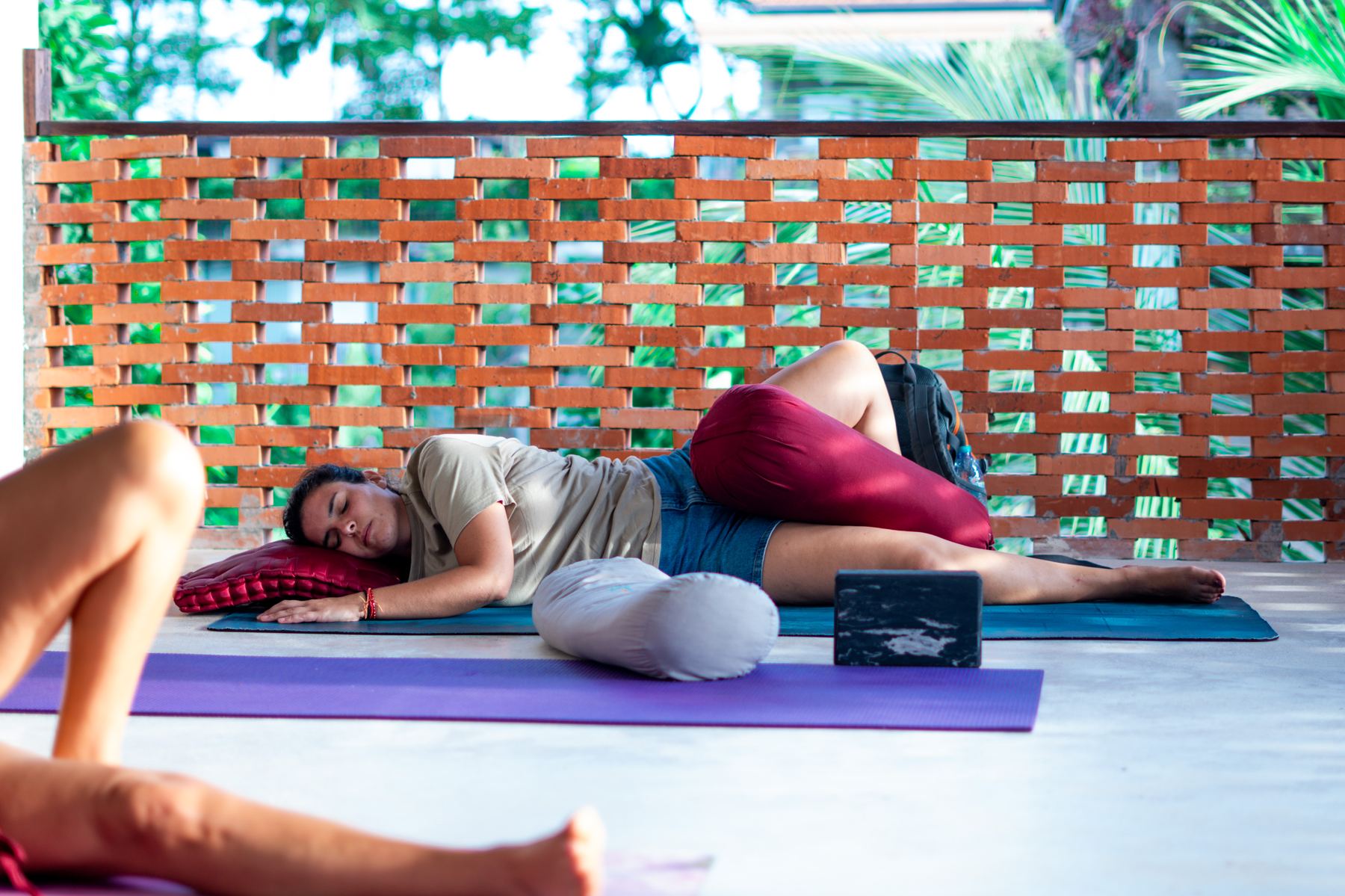
Different tissue, different purpose
Active styles like Vinyasa and Hatha mainly work the muscles — you're contracting and lengthening them through movement, building strength and heat. Yin targets the connective tissue instead: fascia, ligaments, the tissue around the joints. That tissue doesn't respond to short holds the way muscle does. It needs sustained, gentle stress over minutes, not seconds, to actually change — which is the entire reason Yin poses are held so much longer.
That's the physical layer. That's the reason why Yin is as important as more active styles — different tissue, different training stimulus, both useful.
The nervous system layer
The more interesting part, for me, is what happens to your nervous system during a long, still hold. Most of modern life keeps people in a low-grade sympathetic state — the "fight or flight" branch of the nervous system, tuned for alertness and reaction rather than rest. Vinyasa and Hatha, for all their benefits, are still active states; they don't necessarily pull you out of that pattern.
Yin does something different. Staying still, breathing, and staying present inside physical discomfort — rather than moving away from it — is one of the more direct ways to practice shifting from sympathetic activation into the parasympathetic state: rest, digest, repair. You're not just stretching tissue. You're training your nervous system's ability to stay regulated when something is uncomfortable but not actually dangerous, which is a skill that turns out to matter far outside the yoga room.
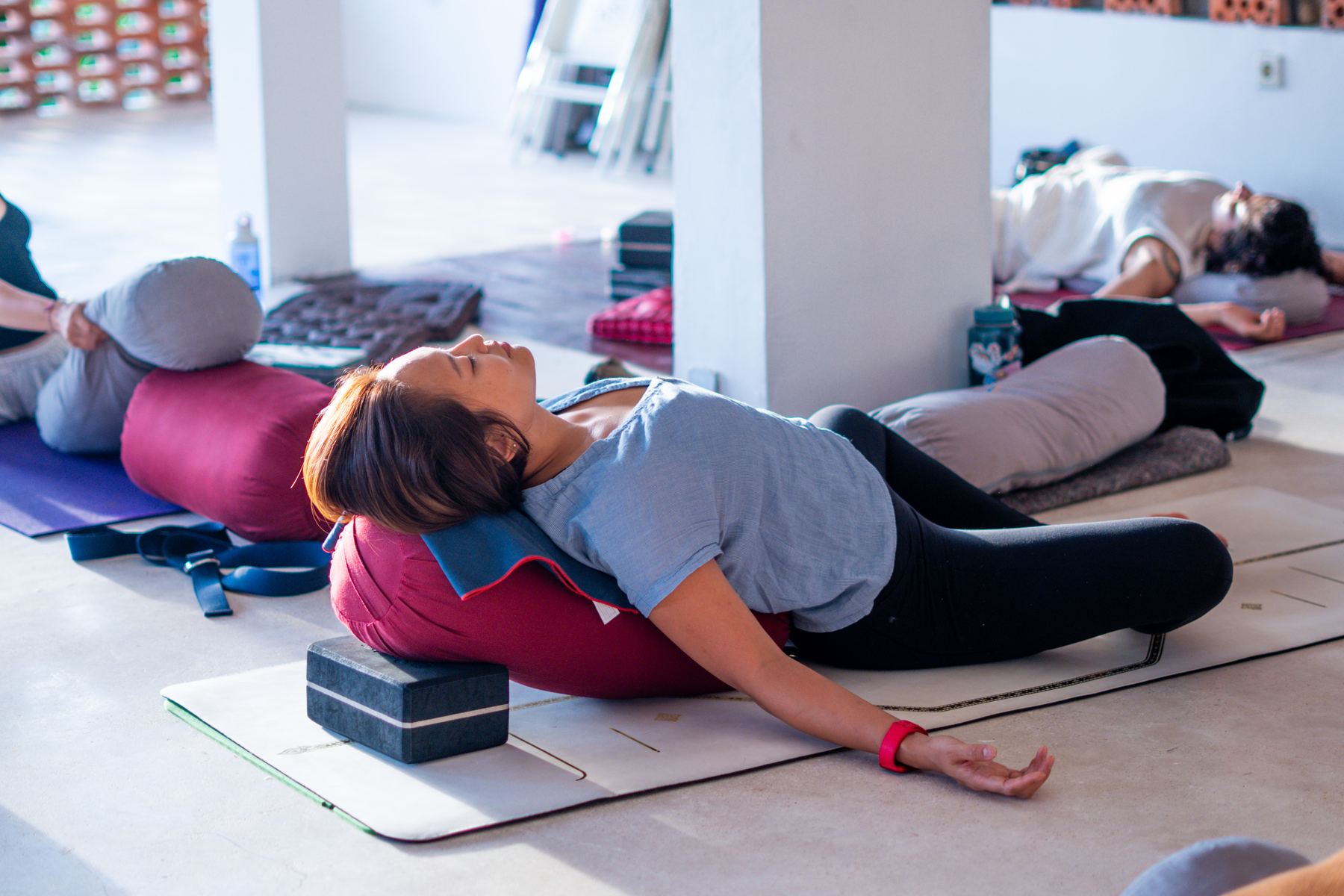
Connecting with the breath and with oneself is a central part of the yoga practice.
Why this belongs in a retreat, not just a class
This is part of why Yin shows up daily on our December retreat in Rishikesh, alongside Hatha and Vinyasa rather than instead of them — the two approaches are doing genuinely different work, and a week that only trains strength and flow without any nervous system down-regulation is missing half the point of a retreat in the first place. It's also why our 300-Hour Multistyle Training dedicates a full third of its practice hours to Yin specifically, rather than folding it in as an afterthought to Vinyasa and Ashtanga.
If you want more of this specifically — nervous system regulation, breathwork, and Yin — it's also a core focus of what I work through with people in 1:1 coaching.