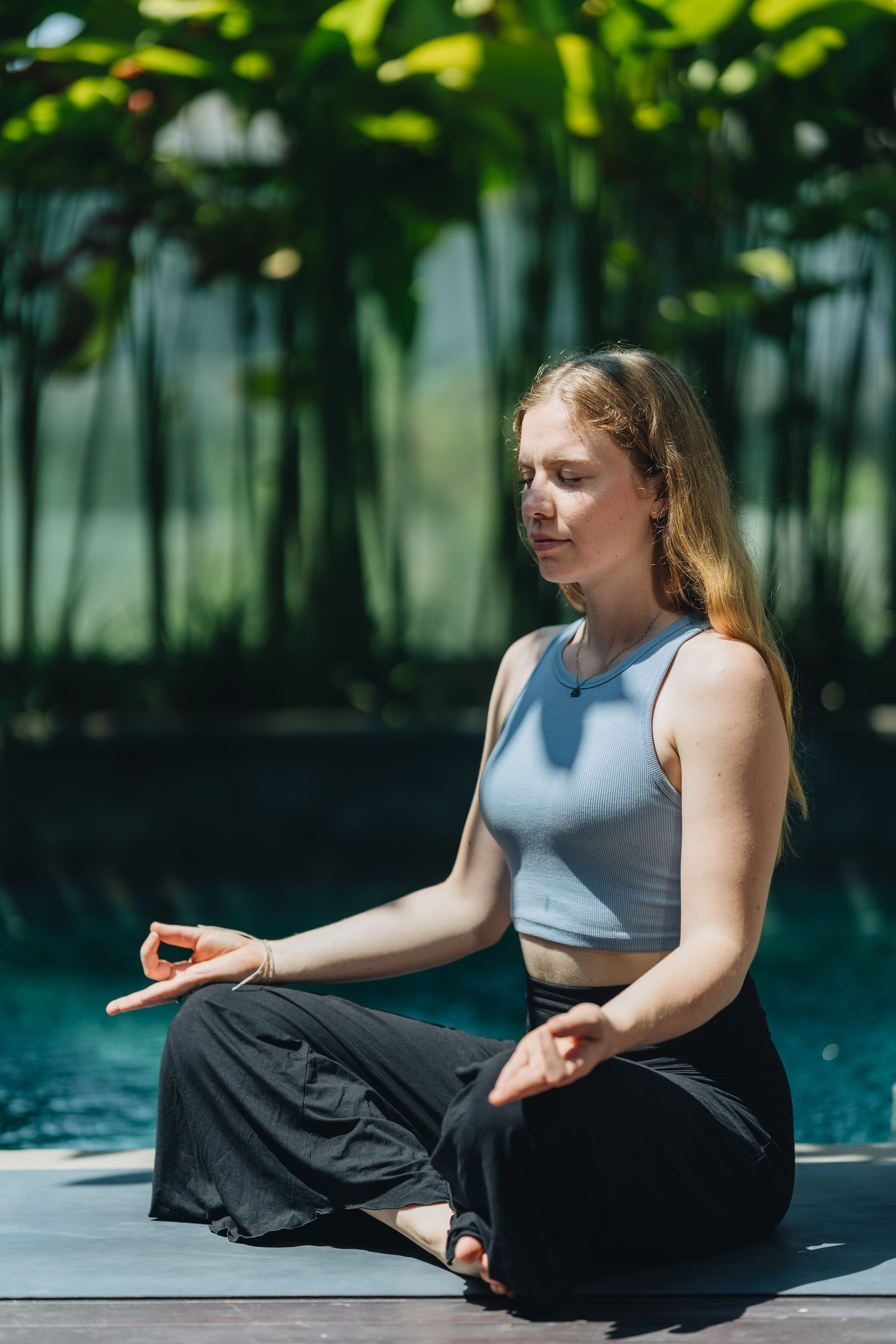
People ask us what a “typical day” on the training actually feels like more than almost any other question. Fair enough — a schedule on a website is just times and titles. So here's what it's actually like to live one of these days, start to finish.
Morning: Practice Before Thought
6am comes early, but by the time you're on your mat it doesn't feel early — the Ganga is right there, the air is still cool, and most of Rishikesh hasn't woken up yet. Mornings alternate between Ashtanga and Yin, which sounds like a strange pairing until you've done it for a few weeks: one day you're moving through a demanding, breath-driven sequence, the next you're barely moving at all, holding a single shape for minutes at a time. By 7:45 we shift into Meditation and Pranayama — classical breathing techniques, then stillness, which by this point in the morning your nervous system is more than ready for.
Breakfast at 9 is unhurried on purpose. This is where most of the real conversation of the day happens — not in a classroom, just people comparing notes on how their bodies felt in that morning's practice.
Midday: The Parts People Don't Expect
Philosophy at 10 surprises people who came in expecting the training to be entirely physical. We go into the actual texts and ideas underneath the practice — not as an abstract history lesson, but as something you're expected to be able to speak to as a teacher when a student asks you a real question about it.
Then from 11:15 to 1:15, the longest single block of the day: Anatomy and Alignment. This is functional anatomy taught with hands-on adjustment work, not diagrams on a slide. By the middle of the training, this is usually the module people say changed the most about how they see their own teaching.
The note on our schedule says “exemplary and subject to change” for a reason — some days run long, some groups need more time on a topic than others. We'd rather tell you that honestly than pretend it's rigid.
Afternoon: Learning to Teach
After lunch, 2 to 3:30 is Self-Study — genuinely unstructured time for personal practice, journaling, or just resting, which by this point in the day people actually need. Then Teaching Methodology from 3:30 to 4:30: cueing, sequencing, and hands-on teaching practice, where you're the one leading for the first time, usually to a very forgiving room of your fellow trainees.
The second practice of the day runs 4:45 to 6:15, Vinyasa or Hatha depending on the week, closing out the teaching day the way it opened — on the mat, not in a lecture.
Evening: What Actually Sticks
Dinner at 6:30 is the same as breakfast — shared, unhurried, and usually the part people remember most clearly months later. Somewhere in the gaps of the day, there's also the Acro Yoga and Thai Yoga Massage workshops, and the excursions to Ganga Aarti and Kunjapuri — those don't happen every day, but they're woven through the month.
If you want the complete breakdown — every module, the full schedule, what's included — we put together a free guide that covers it in more detail than we can here. Or if you'd rather just ask directly, message us on WhatsApp.